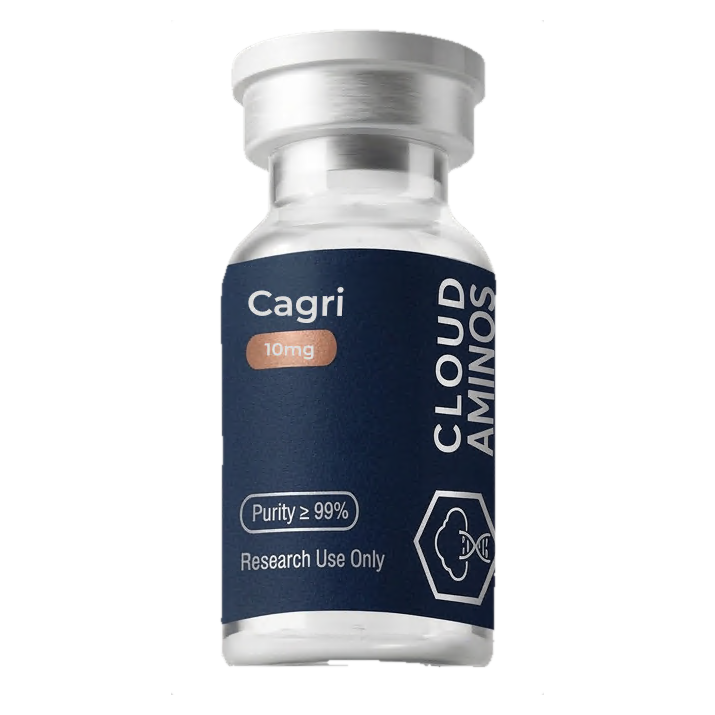
Cagrilintide
Long-acting synthetic amylin analogue with a lipidated side chain, studied for its effects on satiety signalling and energy balance in research models. Supplied as lyophilised powder.
Size:
Price:
$132.00
Quantity:
Bulk Options:
Free shipment protection on every order. Damaged items are replaced at no cost with photo evidence. Flat $5 UPS Ground shipping (2-5 business days) on every order.
Similar Products
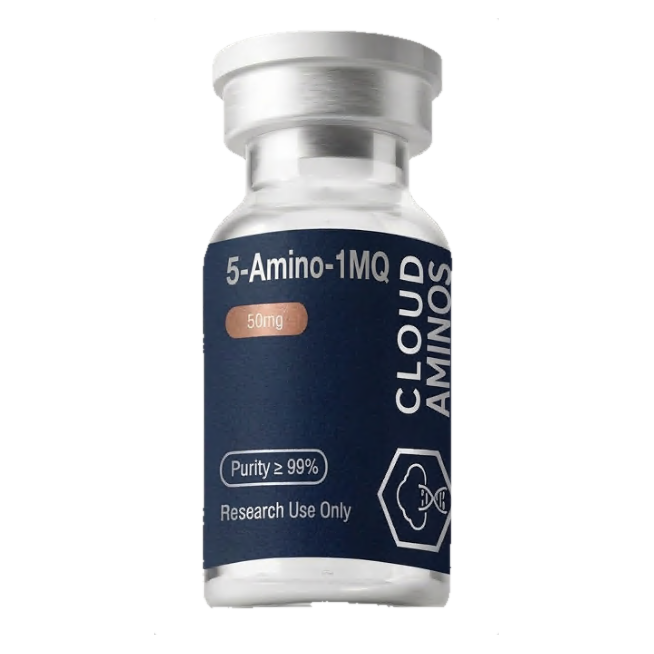
Cagrilintide Research Overview
Cagrilintide is a long-acting analogue of the hormone amylin that reduces appetite through a different pathway than GLP-1 drugs. Alone it produced about 11 percent weight loss in Phase 2; paired with semaglutide as CagriSema it reached about 20 percent in Phase 3.
Also known as: AM833, NN9838, Cagri, CagriSema (with semaglutide)
Background
Cagrilintide is a long-acting analogue of amylin, a hormone the pancreas releases alongside insulin after meals. Natural amylin lasts only minutes and clumps into fibrils, which is why the older amylin drug pramlintide had to be injected before every meal. Novo Nordisk modified the sequence for stability and attached a fatty acid chain so it binds albumin and lasts about a week. It is the first amylin drug that works with once-weekly administration parameters.
Its real purpose is combination. Paired with semaglutide 2.4 mg as CagriSema, the REDEFINE 1 Phase 3 trial reported about 20 percent mean weight loss at 68 weeks, more than either component alone, though short of the 25 percent Novo had projected.
The amylin pathway is attractive because it works through different brainstem circuits than GLP-1, and people who plateau on a GLP-1 drug sometimes respond to adding it. No product is approved yet, and grey-market cagrilintide is unverified material, often sold in the same catalogs as semaglutide for people trying to reproduce CagriSema at home.
Mechanistic Profile
Cagrilintide activates amylin receptors, which are calcitonin receptors paired with receptor activity-modifying proteins, and it also has activity at the plain calcitonin receptor. Signaling in the area postrema and other brainstem regions produces satiety, slows gastric emptying and suppresses post-meal glucagon release. Because these are different receptors and largely different neurons than GLP-1 targets, the two signals add rather than compete, which is the rationale for CagriSema. The fatty acid chain binds albumin so a single weekly amount maintains steady levels, and the sequence changes prevent the aggregation that makes native amylin impractical as a drug.
Reported Research Findings
(human RCT)
CagriSema (2.4 mg of each) produced about 20 percent weight loss at 68 weeks in adults with obesity (REDEFINE 1). (human RCT)
In type 2 diabetes, CagriSema produced about 14 percent weight loss with HbA1c reductions over 68 weeks (REDEFINE 2). (human RCT)
In a 20-week Phase 1b, cagrilintide plus semaglutide gave about 17 percent loss versus 10 percent for semaglutide alone. (human pilot)
(human RCT)
Analytical Validation, Formulation and Storage
Purity: 99% or higher as verified by HPLC, with a third-party certificate of analysis available per batch.
Formulation: lyophilised (freeze-dried) powder in a sterile sealed glass vial, to be reconstituted with an appropriate solvent for laboratory use.
Reported half-life: About 7 to 8 days (roughly 180 hours).
Storage: keep lyophilised material cool, dark and dry (long-term at or below -20 °C). Store reconstituted solutions refrigerated, avoid repeated freeze-thaw cycles and use within laboratory-defined windows.
Selected Literature
Once-weekly cagrilintide for weight management in people with overweight and obesity: a multicentre, randomised, double-blind, placebo-controlled and active-controlled, dose-finding phase 2 trial. The Lancet, 2021.
Safety, tolerability, pharmacokinetics, and pharmacodynamics of concomitant administration of multiple doses of cagrilintide with semaglutide 2.4 mg for weight management: a phase 1b trial. The Lancet, 2021.
Coadministered cagrilintide and semaglutide in adults with overweight or obesity (REDEFINE 1). New England Journal of Medicine, 2025.
Cloud Aminos supplies Cagrilintide as a high-purity research material intended strictly for controlled laboratory use in vitro or in established animal models. This compound is not approved as a drug, diagnostic or dietary ingredient and is not manufactured, packaged or marketed for human consumption, self-experimentation, clinical application or any use outside properly designed and ethically approved research protocols.
Chemical Properties
Common Research Questions
Cagrilintide is a long-acting analogue of the hormone amylin that reduces appetite through a different pathway than GLP-1 drugs. Alone it produced about 11 percent weight loss in Phase 2; paired with semaglutide as CagriSema it reached about 20 percent in Phase 3.
Frequently Asked Questions
Customer Reviews
Be the first to review this product.