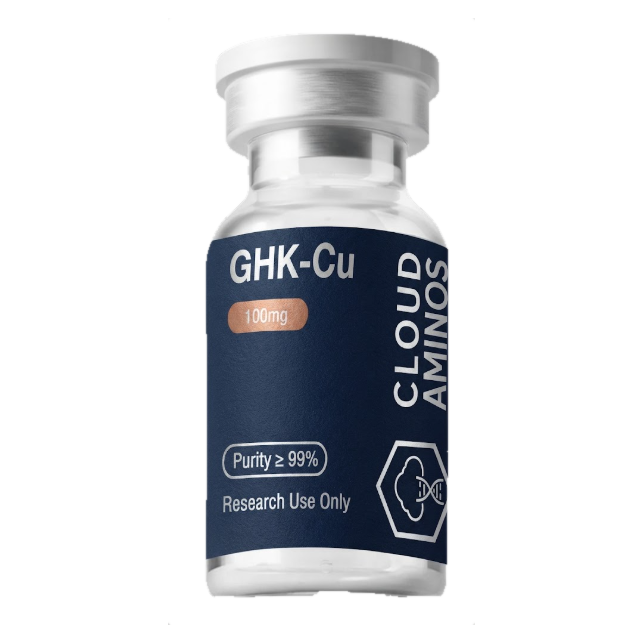
GHK-Cu
Copper-binding tripeptide (glycyl-L-histidyl-L-lysine) studied in skin-remodelling, collagen-synthesis and wound-research models. Supplied as lyophilised powder.
Size:
Price:
$36.00
Quantity:
Bulk Options:
Free shipment protection on every order. Damaged items are replaced at no cost with photo evidence. Flat $5 UPS Ground shipping (2-5 business days) on every order.
Similar Products
GHK-Cu Research Overview
GHK-Cu is a naturally occurring tripeptide bound to copper that declines with age. It is used topically for skin firmness, wrinkles and hair growth, and by injection for wound healing, skin remodeling and general tissue repair.
Also known as: Copper peptide, Glycyl-L-histidyl-L-lysine copper, GHK copper complex, Copper tripeptide-1
Background
GHK is a three amino acid peptide (glycine, histidine, lysine) that occurs naturally in human plasma, saliva and urine. It binds copper ions tightly, and the copper complex is what most people mean by GHK-Cu. It was isolated in 1973 by Loren Pickart, who noticed that plasma from young people made old liver cells behave more youthfully and traced the effect to this small peptide. Plasma levels fall sharply between age 20 and 60, which is part of why it attracted interest as an anti-aging compound.
The topical evidence is the strongest part of the story. Several controlled human studies of GHK-Cu creams showed improvements in skin thickness, elasticity, fine lines and photodamage, comparable to or better than vitamin C and retinol in some comparisons. Human and animal wound healing studies show faster closure and better collagen organization. For hair, small human trials and rodent studies suggest increased follicle size and reduced shedding.
Injectable use is a newer trend with much less data. Gene expression studies show that GHK modulates thousands of genes toward a more regenerative, less inflammatory profile, which is the basis for claims about systemic effects. Animal work suggests benefit in lung injury and nerve regeneration. There are no human trials of subcutaneous GHK-Cu, so systemic administration parameters protocols are entirely community derived.
Mechanistic Profile
GHK-Cu acts as a signaling molecule that shifts gene expression toward tissue repair. It stimulates fibroblasts to produce collagen, elastin and glycosaminoglycans while also increasing the enzymes that break down damaged collagen, which lets tissue remodel rather than simply thicken. It attracts immune and repair cells to wounds, promotes new blood vessel growth and has antioxidant and anti-inflammatory effects, partly through copper delivery to enzymes like superoxide dismutase. Large scale gene expression screens found that GHK influences over 4000 genes, including suppression of genes tied to fibrosis, inflammation and cancer metastasis, and activation of those tied to DNA repair. Copper itself is essential for lysyl oxidase, the enzyme that cross-links collagen.
Reported Research Findings
Topical GHK-Cu cream improved skin thickness, elasticity and reduced wrinkles in women with photoaged skin over 12 weeks. (human RCT)
GHK-Cu outperformed vitamin C and retinoic acid for collagen production in a comparison of topical treatments. (human pilot)
Gene profiling showed GHK reverses expression patterns associated with COPD, cancer metastasis and inflammation. (in vitro)
Accelerated wound closure and improved collagen deposition in rat and rabbit skin wound models. (rodent)
Increased hair follicle size and improved hair growth in mouse models and small human trials. (human pilot)
Analytical Validation, Formulation and Storage
Purity: 99% or higher as verified by HPLC, with a third-party certificate of analysis available per batch.
Formulation: lyophilised (freeze-dried) powder in a sterile sealed glass vial, to be reconstituted with an appropriate solvent for laboratory use.
Reported half-life: Under 1 hour in plasma (estimated); tissue signaling effects persist longer.
Storage: keep lyophilised material cool, dark and dry (long-term at or below -20 °C). Store reconstituted solutions refrigerated, avoid repeated freeze-thaw cycles and use within laboratory-defined windows.
Selected Literature
GHK peptide as a natural modulator of multiple cellular pathways in skin regeneration (review). BioMed Research International, 2015.
The human tri-peptide GHK and tissue remodeling. Journal of Biomaterials Science, Polymer Edition, 2008.
GHK-Cu may prevent oxidative stress in skin by regulating copper and modifying expression of numerous antioxidant genes. Cosmetics, 2015.
Effects of copper tripeptide on the growth and expression of growth factors by normal and irradiated fibroblasts. Archives of Facial Plastic Surgery, 2007.
Cloud Aminos supplies GHK-Cu as a high-purity research material intended strictly for controlled laboratory use in vitro or in established animal models. This compound is not approved as a drug, diagnostic or dietary ingredient and is not manufactured, packaged or marketed for human consumption, self-experimentation, clinical application or any use outside properly designed and ethically approved research protocols.
Chemical Properties
Common Research Questions
GHK-Cu is a naturally occurring tripeptide bound to copper that declines with age. It is used topically for skin firmness, wrinkles and hair growth, and by injection for wound healing, skin remodeling and general tissue repair.
Frequently Asked Questions
Customer Reviews
Deep blue, as expected
Correct colour, correct mass on the COA, no issues at all.
Tom W. Verified purchase
Affordable
Best price I have found for lab-tested GHK-Cu with a real certificate attached.
Sasha K. Verified purchase